One of the first things I learned in Al-Anon was about boundaries. I had none.
I thought setting a boundary with the alcoholic meant cutting them out of your life completely. It seemed like a harsh form of amputation. In Al-Anon, I learned that a boundary is where they stop and I begin.
Living with my mother was easy at first. I thought that was how our relationship was supposed to be. I did everything possible to make her comfortable and safe, giving her what she needed when she asked. I thought I was demonstrating my love for her.
I didn’t realize she had a problem until years later. By then, I was exhausted and worn down to the point that it felt as though there was nothing left of me. Mentally, I was confused, always trying to figure out why things didn’t work. Physically, I felt worn out, too.
The line kept moving
I can’t count how many times I said to myself, “This is the last time I’m going to do this for her.” Or, “If she does that or says that one more time, I will leave. I’ve had enough.”
I told her I couldn’t go through another rejection or being shut out again. But I always went back because I loved her.
The boundaries I tried to set never lasted. Somehow, they got lost in my thinking: “Can’t she see everything I’m doing for her and just love me?”
“Can’t she see everything I’m doing for her and just love me?”
The red line in the sand I had drawn was always moved just a little further back. I was the one paying the price. She kept doing what she wanted, and I was disappearing more and more.
I mattered, too
Then I found Al-Anon and started going like my life depended on it. I didn’t understand at the time how much I needed some kind of intervention. Al-Anon did that for me.
After several months, I started to realize that I was just as important as she was, but I was acting and living my life like I didn’t matter.
Setting boundaries became a way to show myself that I cared about myself. I started learning how to tell her no and mean it.
One dinner was enough
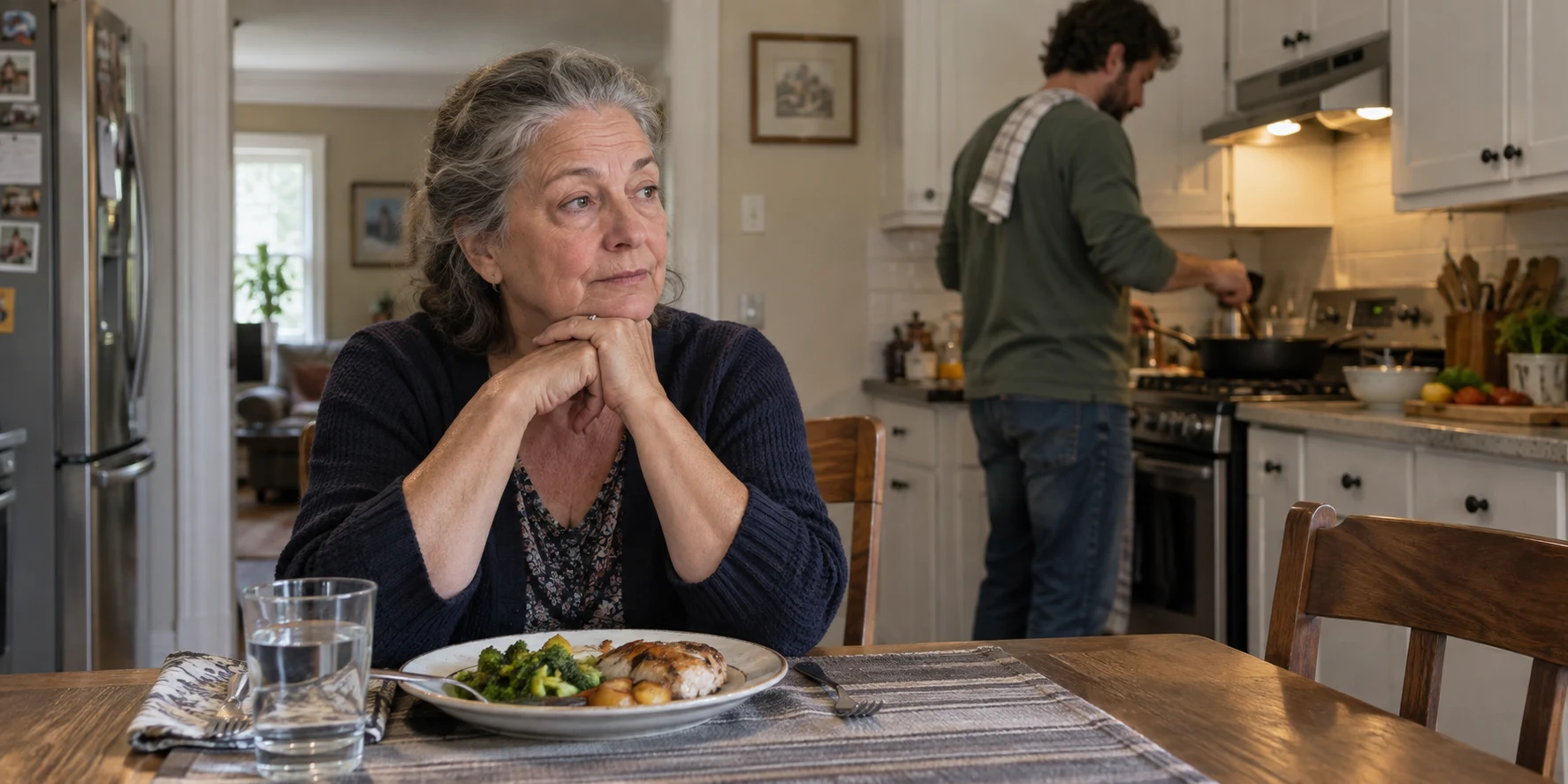
If I fixed a meal and she didn’t want it, I wasn’t going to run out, get something else, and fix that instead. She could get her own dinner. This was what I had made; she could eat it or not.
I began learning that I didn’t have to feel hurt by her choice or think I was a bad person because I hadn’t made something else.
Probably most important for me was learning to set limits when she told me I was worthless or didn’t love her—that if I did love her, I would do this or that for her. Through boundaries, I began learning that I could protect myself from that kind of treatment.
A pattern I didn’t want to repeat
Boundaries are tools I use almost every day. It feels good to be able to say no and mean it. The more I practiced, the freer I started to feel inside.
Without Al-Anon, the steps, and the fellowship of the people I met, I would still be stuck. My life might look the same—not necessarily with my mom, but in another relationship. The cycle would continue.
Al-Anon helped me begin to break that cycle. Boundaries are a major part of that help.
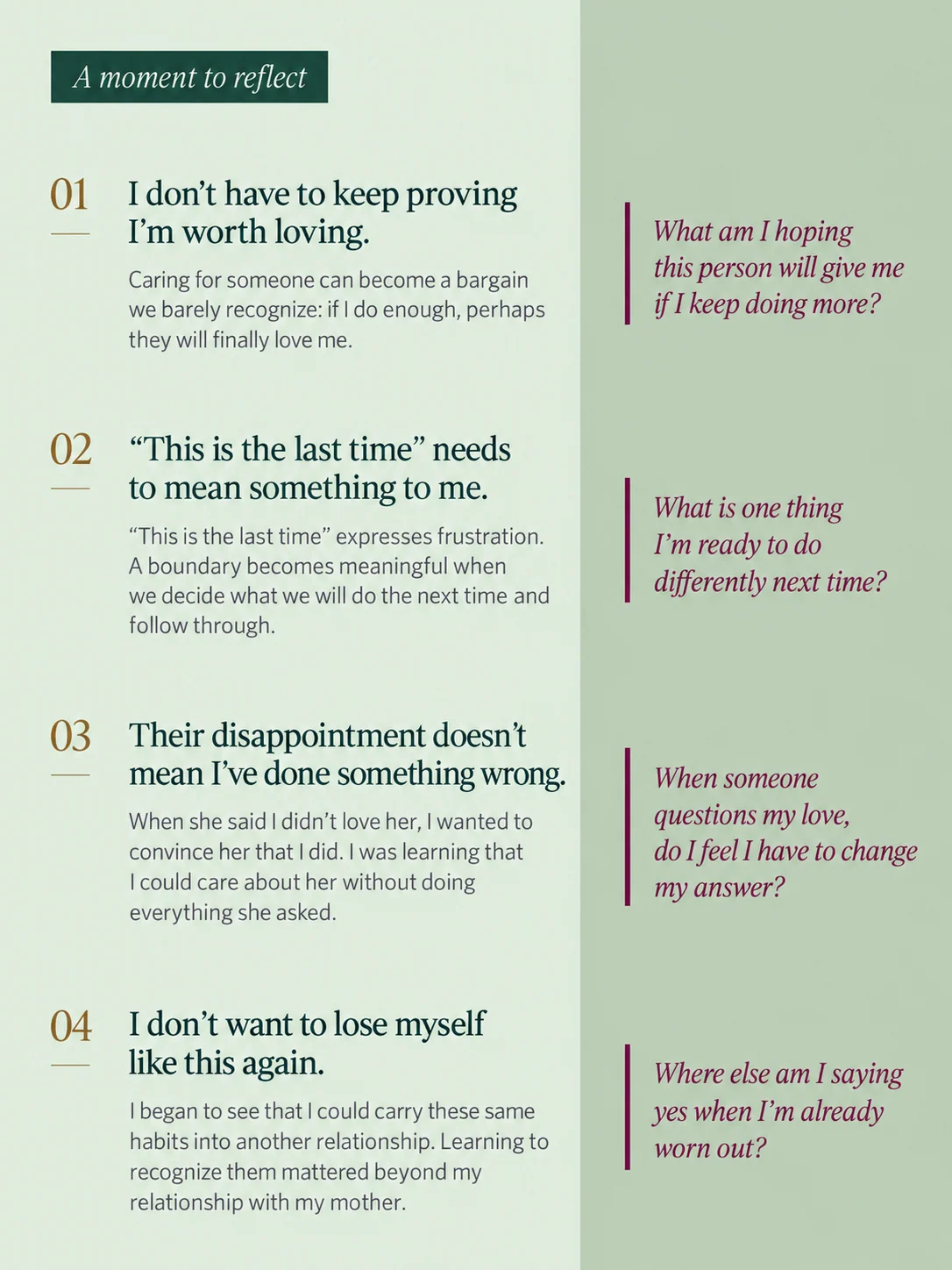
A moment to reflect
1. I don’t have to keep proving I’m worth loving.
Caring for someone can become a bargain we barely recognize: if I do enough, perhaps they will finally love me.
What am I hoping this person will give me if I keep doing more?
2. “This is the last time” needs to mean something to me.
“This is the last time” expresses frustration. A boundary becomes meaningful when we decide what we will do the next time and follow through.
What is one thing I’m ready to do differently next time?
3. Their disappointment doesn't mean I've done something wrong.
When she said I didn’t love her, I wanted to convince her that I did. I was learning that I could care about her without doing everything she asked.
When someone questions my love, do I feel I have to change my answer?
4. I don’t want to lose myself like this again.
I began to see that I could carry these same habits into another relationship. Learning to recognize them mattered beyond my relationship with my mother.
Where else am I saying yes when I’m already worn out?