The night shift
You’re exhausted, but your mind won’t let you sleep. You scan tomorrow for trouble. What crisis is coming? What disappointment lies ahead? What could you say, arrange, check, or prevent before things fall apart again?
Then your mind turns toward yesterday. Why didn’t you see it sooner? What should you have done differently? If only you’d said the right thing, recognized the danger, or acted before it was too late.
The mind moves between prediction and regret, reviewing the past as preparation for the future. Every possible situation feels urgent, a problem to be solved. It’s hard to rest when you believe there’s still something you can figure out.
“Your body’s in bed, but part of you is still standing watch.”
The promise hidden inside the worry
Worry can feel productive. It carries an unspoken promise: if you think hard enough, prepare carefully enough, and make the right choices, you can prevent the next crisis.
When something’s already gone wrong, that promise turns into blame and regret. Blaming yourself keeps alive the belief that you could have changed their drinking or prevented the consequences—if only you’d found the right words or done something differently. That belief is seductive because it gives you something to keep working on. You review the past again, hoping it will show you how to prevent the next crisis.
“No amount of reviewing the past can give you control in the present.”
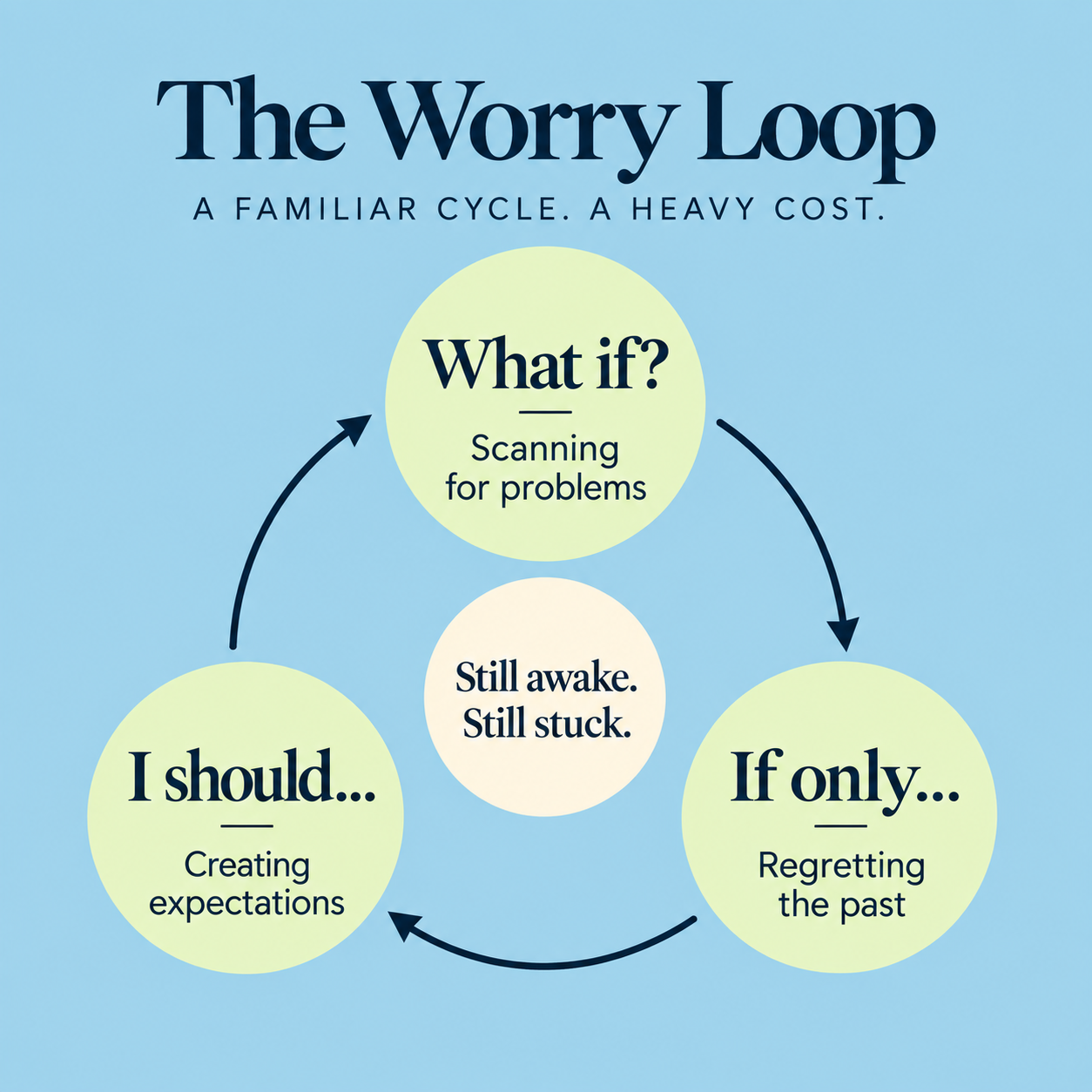
The Worry Loop. A familiar cycle. A heavy cost.
What if? — Scanning for problems.
If only… — Regretting the past.
I should… — Creating expectations.
Still awake. Still stuck.
The loop promises control. What it produces is vigilance, guilt, and exhaustion.
The impossible assignment
The night shift doesn’t end in the morning either. Last night’s thinking becomes today’s actions: checking phones, reading moods, tracking whereabouts, covering mistakes, paying another adult’s overdue bills, and searching for the words that’ll finally make someone understand. Another person’s life has become more important than your own.
You may call it helping without asking what you expect it to accomplish. After all, if I don’t do these things, who will? The painful question to face is whether you’re offering help or trying to force an outcome. Often, it’s control dressed up as caring.
The January 7 reading, Impossible Responsibilities, describes the relief of putting down responsibilities that were never ours to carry.
You didn’t create another person’s choices, and you can’t think, plead, plan, or suffer enough to change them. Recognizing this doesn’t mean you no longer love them. It means loving them doesn’t give you the power to change them.
Caring without carrying
Letting go isn’t shutting down, punishing someone with silence, or abandoning a person who needs appropriate help.
You can listen and tell the truth without taking responsibility for what someone does next. Offering a ride to a meeting leaves the decision to attend with them; calling repeatedly to make sure they went puts you back on watch. Notice when your help becomes an effort to make someone do what you want. You can stop that effort and hold your ground when guilt or pressure draws you back in.
Letting go respects another person’s dignity—their right to make decisions. As you put down yesterday’s regrets and tomorrow’s possible crises, you have more attention for your own life today: what you need and how you want to spend your day.
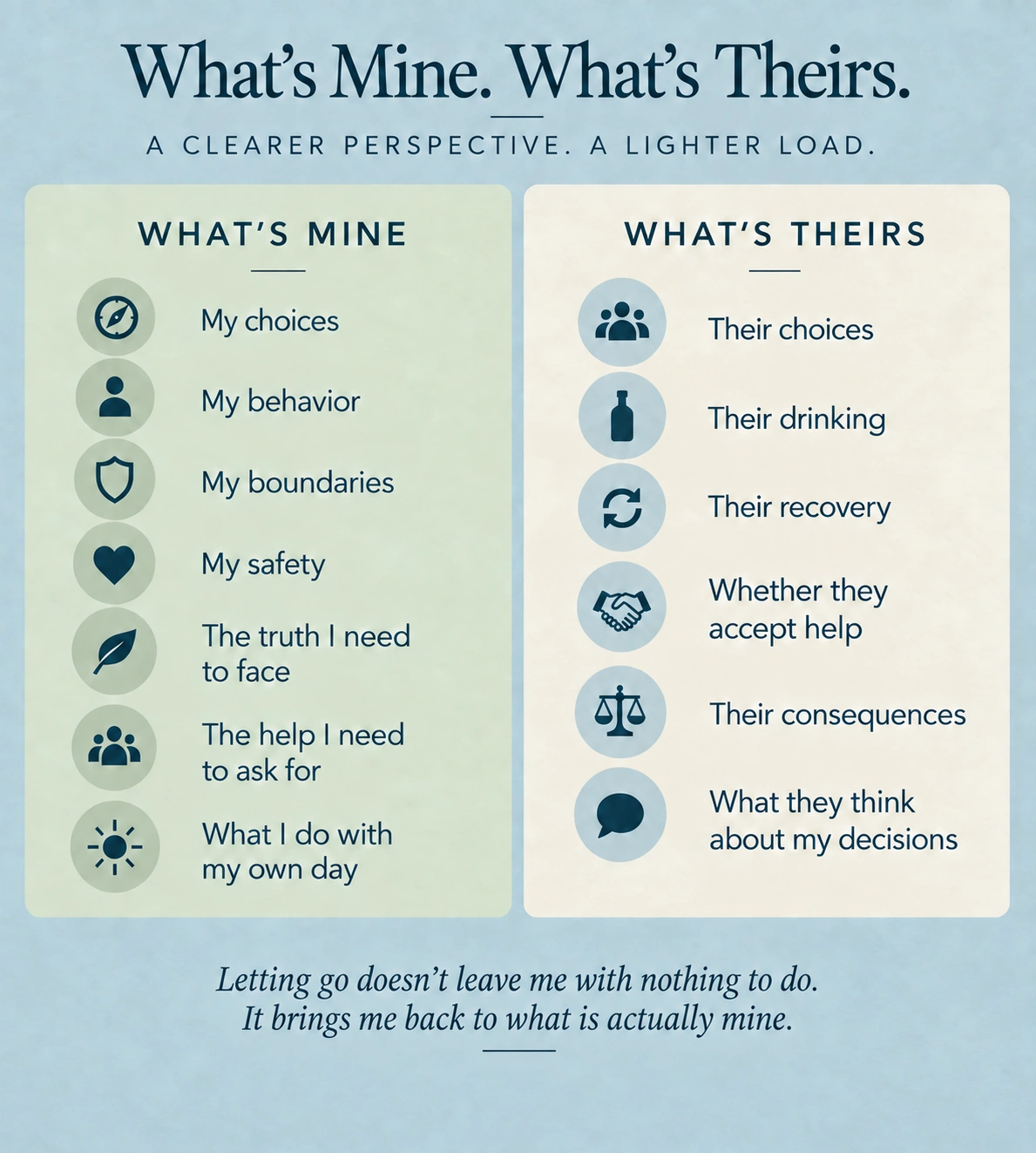
What’s Mine. What’s Theirs. What’s mine: My choices, My behavior, My boundaries, My safety, The truth I need to face, The help I need to ask for, What I do with my own day.
What’s theirs: Their choices, Their drinking, Their recovery, Whether they accept help, Their consequences, What they think about my decisions.
Letting go doesn’t leave me with nothing to do. It brings me back to what’s actually mine.
Let go and let God
Even when that distinction is clear, you may still want to check one more time, make one more call, or offer one more warning. Stepping back can feel frightening when staying involved has been your way of feeling safe.
If I let go, who will take care of them?
“Let go and let God” offers somewhere to place that fear. I’m not asking God to produce the outcome I prefer. I’m placing someone I love in the care of a Higher Power, without directing what their journey should be. I can return to that trust when watching them struggle makes me want to take over again.
“They have a Higher Power, and I’m not it.”
I have a Higher Power too. I can ask for help with the uncertainty, seek support, and resist the urge to step back in simply to ease my own discomfort. I don’t have to feel calm before I practice letting go.
Tonight’s next honest action
Before you return to the night shift, ask yourself: Is there something I need to do now, or am I trying to think my way out of uncertainty?
There may be a conversation, a boundary, or a request for help that’s yours to make. You can acknowledge it and decide when to act without rehearsing every possible outcome.
For tonight, letting go may be as simple as allowing the question to remain unanswered. Any problems may still be here in the morning. You don’t have to solve them in your mind all night.