Is someone else’s drinking affecting your life? You keep the day running while privately worrying about tonight. Or the drinking stopped years ago, but you still watch other people’s moods before deciding what you need. Start with what this has cost you.
Al-Anon offers help to families and friends affected by someone else’s drinking. The person who drinks doesn’t have to seek help first.
Is Al-Anon for me?
How is the drinking affecting my life?
You cancel dinner because you can’t count on someone arriving sober, then explain another missed commitment. By evening, you’re listening for the door instead of enjoying what you had planned. These moments add up, even when you keep up with work and family responsibilities.
On a good day, it’s easy to dismiss your concern. The person may hold a job, care about you, and meet many responsibilities. You can recognize those qualities and still be honest about the effect of their drinking. You don’t have to settle an argument about whether they’re an alcoholic before seeking support.
Why would I need help when I’m not the one drinking?
Perhaps you’ve spent enormous effort trying to help the person you love. Asking for help yourself can feel beside the point. Surely everything would improve if they would just stop.
But you’re living with the worry, anger, and uncertainty now. You need somewhere to tell the truth about how you’re doing. Hearing how others have handled similar situations may help you stop taking responsibility for things you can’t manage and see a choice that is yours to make.
You don’t have to wait for someone else to change before you begin your own recovery.
Seeking help doesn’t mean you caused the drinking or failed the person. It doesn’t decide the future of your relationship for you.
What if the drinking stopped, or happened long ago?
Sobriety may bring relief without immediately rebuilding trust or changing old habits. You may still check, anticipate trouble, or wait for a relationship to feel different. Separation or loss can leave questions you haven’t had room to address. Support remains available when the person no longer drinks or is no longer in your life.
Celina R. describes that gap in Learning to Trust: her husband was sober, but she was still angry and watching for trouble.
If you grew up around drinking, you may know everyone else’s needs more readily than your own. Perhaps saying no still feels dangerous, or you find yourself waiting for trouble when the house is quiet. Al-Anon welcomes adults affected by a parent’s drinking. Its assessment for adults who grew up with a problem drinker offers more questions to consider.
Young people need support too. Alateen is part of Al-Anon for teenagers affected by another person’s drinking. A teen can start with its self-assessment or speak with a trusted adult, such as a school counselor. No young person is responsible for getting an adult sober or holding the family together.
What is Al-Anon?
Al-Anon is a fellowship of relatives and friends whose lives have been affected by someone else’s drinking. Members meet to share experience, strength, and hope and work a spiritual program of recovery. It is separate from Alcoholics Anonymous: AA serves people seeking recovery from their own drinking; Al-Anon serves the people affected by someone else’s. Al-Anon’s introduction explains the fellowship in its own words.
Many people arrive hoping to hear how to stop the drinking. At a meeting, they hear members talk about their own lives: what they’ve tried, what hasn’t worked, and what they’re doing differently. That shift can be surprising.
The program brings together meetings, the Twelve Steps, sponsorship, and the wisdom members pass to one another.
How do I begin?
Find a meeting you can attend
Start with a time and format that work for you. Going to a room with other people may matter most; for someone else, an online or telephone meeting is the workable first step. Hybrid groups offer both an in-person gathering and an electronic way to attend. Check a listing’s details before joining.
- In person or hybrid: Search the official meeting finder.
- Online or by telephone: Explore Al-Anon’s meeting options.
- For local help: Use Worldwide Al-Anon Contacts to find an information service.
- For a teenager: Start with Alateen’s meeting information and check the group’s access arrangements.
If a listing leaves you unsure, ask the group contact: “I’ve never attended before. What do I need to know about joining?”
What will happen there?
Meeting formats vary. A group may have readings, a topic, or a member speaking about their experience, followed by time for others to share. There are no dues or fees, though a group may invite voluntary contributions to cover expenses. Members are asked to respect one another’s anonymity and what they hear in the meeting. Ask about a group’s online privacy practices if you’re unsure.
You will hear references to God or a Higher Power. You don’t have to believe anything before walking in. Al-Anon is a spiritual program rather than a religious one, and members have room to explore their own understanding. Al-Anon’s newcomer FAQ addresses these and other common questions.
The separate article Your First Al-Anon Meeting: What to Expect walks through the experience in more detail.
What if the first meeting doesn’t feel right?
A first meeting can feel unfamiliar. Worry may leave you comparing your story with everyone else’s or trying to understand the language. Al-Anon suggests trying at least six different meetings before deciding whether it is right for you. Groups differ in size, format, and tone. Try another if the first isn’t a good fit.
Listen for something you recognize: a feeling you hadn’t named, a choice someone made, or a person you would like to talk with afterward. That may be enough to bring you back.
How does the program work?
Meetings and the wisdom of the fellowship
Reading about a principle can help you understand it. At a meeting, you hear what happened when someone tried to live it. A parent worried about an adult child may recognize the same urge to check and intervene that a partner describes. A story about no longer making excuses for a relative’s absence brings another choice into view. Their circumstances don’t have to match yours for the experience to be useful.
Members share what they have learned, including the times an old habit returned. No single person has the answer to your life. Over time, familiar faces and honest conversations give you people to turn to when a difficult moment comes between meetings.
The fellowship passes along what its members have learned by living it.
The Twelve Steps: turning toward your own life
The Twelve Steps are Al-Anon’s program of recovery. Working them with a sponsor shifts your focus from the alcoholic to your own life. You begin to see choices you hadn’t noticed and find new ways to respond to people and situations.
The Steps begin with accepting that you can’t control another person’s drinking. They invite you to seek help from a Higher Power, take an honest look at your own behavior, become willing to change, and make amends where you have caused harm. Later Steps bring that honesty into ordinary days through continuing inventory, prayer and meditation, and sharing what you have learned.
This isn’t a course to finish before you qualify for help. Members return to the Steps as they grow. Read Al-Anon’s official wording of the Twelve Steps and explore them with a sponsor.
Sponsorship: a conversation between meetings
A sponsor is an Al-Anon member who shares their experience of working the program with another member. When you’re deciding whether to make another call, offer money, or have a hard conversation, a sponsor is someone to talk with. That conversation helps you notice the fear behind your first impulse and consider a different response.
A sponsor shares experience; you make your own decisions. Listen for someone whose way of practicing the program speaks to you. Then ask whether they’re available and what contact works for both of you. Al-Anon’s sponsorship information explains more.
A spiritual program you can explore
For some, talk of God or a Higher Power is familiar. For others, it is a reason to hesitate. Al-Anon makes room for different beliefs and for uncertainty. You don’t have to borrow another member’s understanding to begin.
Spiritual practice can start with admitting, “I don’t know what to do.” Before another urgent call, pause and ask for guidance. Speak with a sponsor or another member, then decide what to do. The situation may remain uncertain, but you’ve given yourself time to choose your response. Accepting what’s happening today doesn’t mean approving of harmful behavior.
Other members can tell you what prayer, meditation, and a Higher Power mean in their lives. You remain free to explore what they mean in yours.
Taking the program into an ordinary day
The work doesn’t end when a meeting closes. An idea you understood there is harder to remember during an argument the next afternoon. That moment is where practice begins.
In the morning: Read a Daily Reflection or a passage from Al-Anon literature. Choose one principle to carry into the day. A prayer for guidance or a short gratitude list can help you hold on to that principle.
When something happens: Pause and ask, “What am I feeling? What’s my part? What choice is mine?” Call a sponsor or another member before returning to a familiar argument. A short note about what happened may help you see the pattern later.
In the evening: Look back honestly. What disturbed your serenity? Do you owe anyone amends? What did you do well? What are you grateful for? The day held more than its hardest moment.
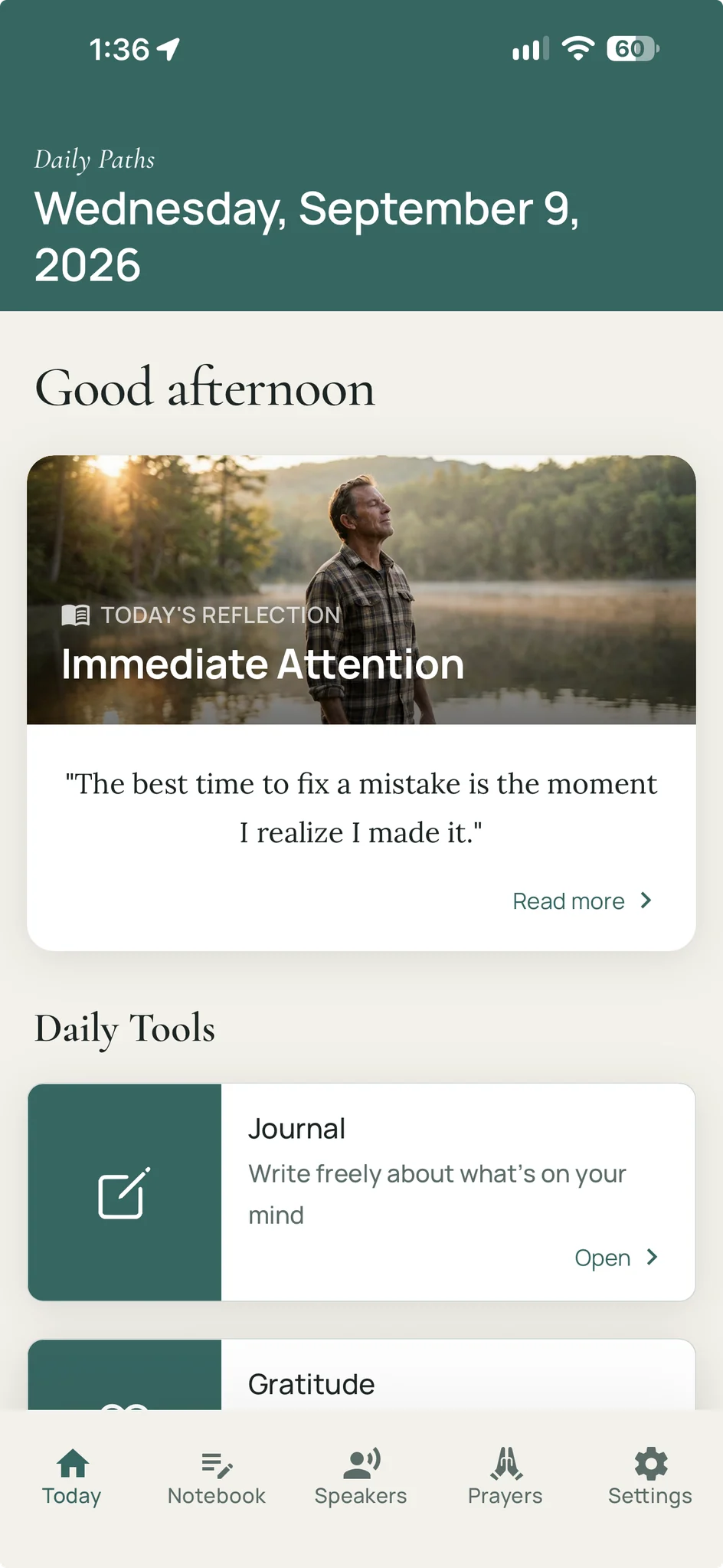
The Daily Paths app offers reflections, prayers, a gratitude list, a journal, and space for a fuller evening inventory. It also has records of popular Al-Anon speakers that you can download and listen later. This app lets you start your day with a thought provoking reading and keep the tools close at hand to support your daily program.
Understanding a principle today doesn’t mean you’ll remember it every time. Bring the difficult moments back to your sponsor or your next meeting. There’s something to learn and another chance to practice.
Other help belongs in the picture
Al-Anon offers shared experience and ongoing support. A counselor, healthcare professional, or qualified adviser may also help with a concern that needs individual, medical, financial, or legal attention. These forms of help can work alongside meetings.
Other fellowships address related experiences. Adult Children of Alcoholics and Dysfunctional Families focuses on the effects of growing up in an alcoholic or dysfunctional home. Co-Dependents Anonymous focuses on relationships. They are separate programs with their own meetings and newcomer information.
One step today
Read the assessment that fits your situation, save the details of a meeting, or contact a group. If you go, a simple introduction is enough: “I’m new. Someone’s drinking is affecting me, and I’d like to listen.”
Daily Paths is an independent publication, not affiliated with or endorsed by Al-Anon Family Group Headquarters, Inc. This guide is Daily Paths’ own writing and is not Al-Anon Conference Approved Literature. For official program information, visit al-anon.org.